
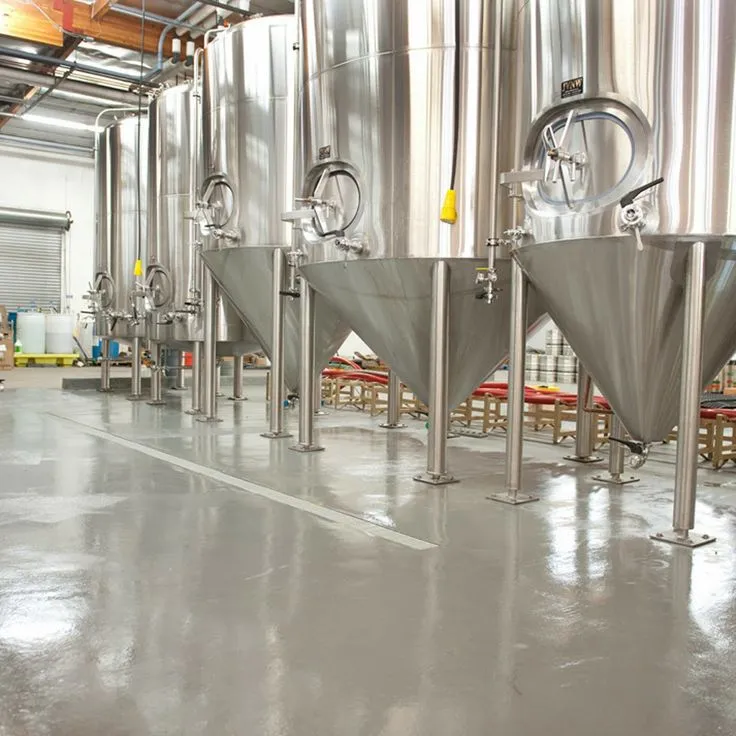
Brewery floors operate beneath a production process that constantly introduces moisture, ingredients, cleaning chemicals, equipment loads, and temperature changes. Fermentation vessels, kegging stations, packaging equipment, hoses, and mobile racks can all affect the same concrete surface. Unlike an ordinary warehouse, a brewery may shift quickly between production and intensive sanitation. Flooring should therefore be planned around brewing activity itself, with special attention to wet processing areas, drainage, chemical exposure, equipment bases, and cleaning cycles.
Fermentation Areas Stay Busy
Fermentation tanks occupy substantial floor space and require regular inspection, cleaning, and maintenance. Employees repeatedly move around vessel bases while hoses, pumps, and mobile equipment may travel through the same narrow routes.
Small product spills can occur during transfers or maintenance. When liquid reaches cracked or porous concrete, cleanup can become more difficult.
Managers should therefore evaluate the condition of the slab around tanks before installing a new resinous system, especially where previous coatings or repairs have deteriorated.
Sugars and Organic Residues Matter
Beer production involves sugars, yeast, wort, and other organic materials that can reach the floor during processing. Although these substances differ from aggressive industrial chemicals, residues can become sticky and difficult to remove when they collect in joints or damaged areas.
Facilities evaluating Food And Beverage Flooring Services In Nj should consider how frequently floors are washed and where product residues tend to accumulate.
A seamless, non-porous resinous surface can reduce open joints and porous areas, making routine sanitation more manageable when paired with an appropriate cleaning program.
Cleaning Cycles Add Chemical Exposure
Breweries typically use cleaning and sanitation procedures repeatedly throughout production. Detergents, sanitizers, and wash water can contact floors around tanks, filling equipment, and processing lines.
The flooring specification should reflect these substances rather than assuming that ordinary water is the primary exposure. Managers should provide contractors with information about cleaning products, concentration, frequency, and temperature.
This helps determine whether epoxy, urethane-cement, or another resin system is better suited to a particular production zone.
Drainage Shapes Daily Efficiency
Wet processing facilities depend heavily on effective drainage. Water and product residues should move toward drains rather than remain in low spots around equipment.
Before resurfacing, managers should observe the floor during normal cleaning. Locations where water consistently pools may indicate slope issues, deteriorated concrete, or poorly detailed drain transitions.
A resinous coating can create a continuous surface, but it cannot correct every major drainage problem. Substrate issues should be addressed before the final system is applied.
Equipment Bases Need Careful Detailing
Brewing equipment creates numerous interruptions in the floor. Tanks, pumps, piping supports, filling equipment, and utility connections can limit access during surface preparation.
A qualified Industrial Epoxy Flooring Contractor In Nj should explain how concrete around fixed equipment will be prepared and repaired. Open floor areas may be mechanically profiled efficiently, while edges and tight spaces often require additional attention.
Consistent preparation around these difficult details helps avoid weak points beside otherwise well-prepared surfaces.
Keg and Cart Movement Adds Impact
Production floors also experience mechanical wear. Filled kegs, mobile racks, carts, pallet jacks, and packaging materials may travel through the same routes every day.
Turning zones and transitions between brewing, storage, and packaging areas can receive greater abrasion than lightly used sections. Managers should identify these routes during project planning so the flooring system reflects both wet processing and material movement.
Repeated impact around thresholds or joints should also be considered when assessing existing damage.
Texture Must Remain Cleanable
Wet floors require practical traction, but brewery sanitation can become harder if the surface is excessively rough. Yeast, sugars, and residue may settle into deep texture and demand additional scrubbing.
The best profile balances employee footing with washdown efficiency. Tank areas, packaging zones, dry storage, and utility spaces may not all need the same texture.
A zone-based specification can provide additional traction where moisture is common while keeping comparatively dry areas easier to clean.
Plan Renovation Around Production
Breweries may operate on tightly scheduled brewing, fermentation, packaging, and distribution cycles. Flooring work should be coordinated with those schedules rather than treated as an isolated construction project.
Equipment access, surface preparation, repairs, resin application, and curing all need sufficient time. Phased installation may be useful where production cannot stop completely.
Clear scheduling also prevents traffic or equipment from returning before a newly completed section is ready.
Conclusion
Brewery flooring has to support far more than ordinary foot traffic. Fermentation activity, organic residues, sanitation chemicals, drainage, heavy vessels, kegs, carts, and repeated washdowns create a distinctive operating environment.
A stronger flooring strategy starts by understanding how brewing and cleaning cycles interact with the concrete below. Proper preparation, suitable resin chemistry, effective drainage, balanced texture, and thoughtful scheduling can create a production floor better matched to the realities of brewing while making everyday sanitation and maintenance more manageable.