
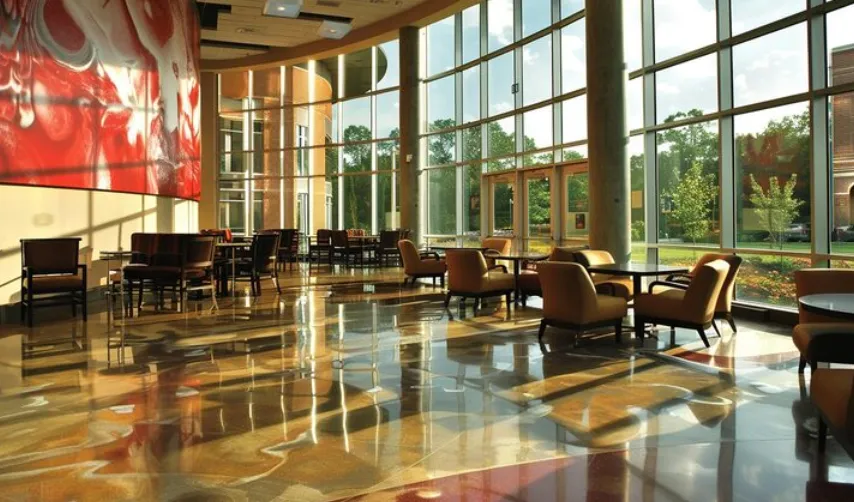
Keeping commercial food prep spaces completely clean takes serious effort when dealing with raw bare concrete floors daily. Laying down tough commercial epoxy flooring Hunter Valley systems stops spilled liquids from sinking deep into porous concrete bases. Grease, food oils, and acidic fruit juices easily ruin unsealed floors over long busy kitchen working hours. You should always scrape away loose debris and scrub grease spots clean before spreading any liquid resin. Checking for subfloor moisture issues beforehand prevents annoying surface bubbles from ruining your fresh floor finish later.
Meeting Strict Health Standards
Commercial kitchens along the coast must meet strict hygiene rules to protect workers and customers from food contamination risks. Installing seamless food grade flooring on Central Coast surfaces creates a non-porous barrier that repels harsh bacteria and fungal growth. Standard tile floors often trap dirt and stagnant water inside grout lines, making daily cleaning chores much harder. Seamless coatings allow kitchen staff to wash down entire floor areas using high-pressure hot water hoses. Keeping floor surfaces smooth stops food particles from collecting in hidden cracks or tight corner spaces.
Preparing Concrete Slabs Well
Proper mechanical surface preparation determines whether your new protective coating stays stuck or peels off under heavy kitchen traffic. Kitchen crews or contractors must grind down rough concrete or scrub away old grease stains using strong degreasers first. Applying a durable commercial epoxy flooring layer over properly etched concrete ensures maximum adhesion across your space. Filling deep slab cracks with dense patch putty stops liquid base coats from seeping down into subfloor gaps. Skipping essential surface grinding steps almost always leads to early peeling near busy cooking equipment areas.
Resisting Thermal Shock Impacts
Hot water spills and heavy cooking equipment subject food facility floors to extreme daily temperature changes constantly. Choosing high-performance food-grade flooring Central Coast options helps prevent surface cracking caused by rapid thermal expansion shifts. Standard floor paints expand and contract poorly, which leads to early blistering, chipping, and peeling under heat. Pouring mixed liquid resin out into flat roller trays right away prevents rapid heat buildup inside deep mixing buckets. Keeping extra roller covers nearby guarantees steady application progress if liquid materials start thickening faster than planned.
Adding Anti-Slip Textures
Broadcasting coarse quartz sand or mineral aggregates across wet base coats adds useful foot traction for busy kitchen workers. Kitchen staff need reliable traction when walking across floors splashed with cooking oil, water, or stray liquid ingredients. Using quality commercial epoxy flooring Hunter Valley kits lets you mix in custom anti-slip aggregates suited for your floor layout. Applying a clear protective topcoat locks down scattered aggregates against heavy rolling carts and constant boot traffic easily. Sweeping up loose excess sand after complete curing leaves a textured, safe walking surface throughout working bays.
Lowering Long-Term Maintenance
Food processing facilities require simple daily cleaning routines that save time while keeping working areas looking clean and organized. Upgrading bare concrete with food grade flooring central coast features eliminates concrete dust that settles on clean prep tables and tools. Kitchen workers can easily clean large floor zones using automatic floor scrubbers filled with neutral pH soap solutions. Non-porous surfaces prevent dark oil stains from soaking deep into concrete slabs over long operating periods every week. Regular daily sweeping removes sharp debris and stray food scraps that might scratch protective surface finishes.
Selecting Appropriate Work Gear
Using proper application equipment prevents visible lap lines and uneven coating thickness across large commercial kitchen floor spans. Heavy notched squeegees push liquid resin evenly across slabs before workers back roll using solvent-resistant roller covers on extensions. Purchasing commercial-grade materials for your commercial epoxy flooring Hunter Valley job stops loose roller fibers from sticking in wet resin. Wearing spiked shoes allows applicators to walk across tacky surfaces to scatter decorative color flakes without ruining smooth layers. Washing tools with the proper solvent right after finishing saves money on future concrete projects.
Conclusion
Upgrading commercial food prep floors with protective resin coatings enhances overall durability while protecting underlying structural slabs from daily wear. Visiting blastprepgrind.com gives you access to practical guidance regarding surface preparation techniques and professional floor coating options. Taking time to properly clean concrete surfaces ensures long-lasting adhesion for various commercial and industrial floor applications. Choosing reliable application tools keeps maintenance minimal while keeping your working environments clean, safe, and organized for years. Please reach out to our team today if you require assistance choosing appropriate coating materials.