
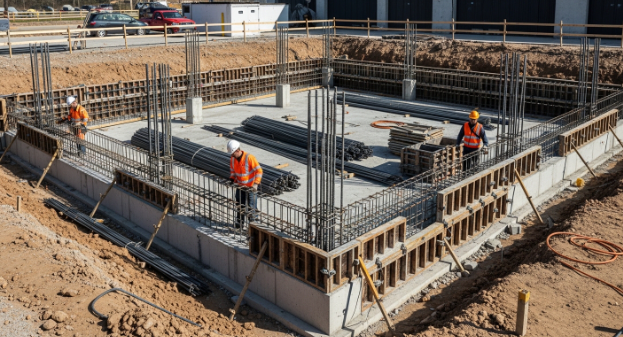
Commercial buildings are designed to handle constant use, heavy loads, and long-term operational demands. Whether it’s an office complex, retail space, or industrial facility, the success of a project depends largely on what lies beneath the surface. A strong and well-planned foundation ensures stability, safety, and durability throughout the life of a commercial structure.
As construction standards evolve, developers are placing greater emphasis on foundation quality to avoid structural issues and costly repairs later on.
The Purpose of Foundations in Commercial Construction
Foundations serve as the structural base that distributes a building’s weight evenly across the ground. In commercial projects, this role becomes even more critical due to larger building sizes and higher load requirements.
A properly designed foundation helps prevent uneven settling, cracks, and moisture intrusion. It also ensures that the structure can withstand environmental factors such as soil movement, temperature changes, and heavy usage over time.
Key Types of Commercial Foundations
Different commercial projects require different foundation systems based on soil conditions, building design, and load capacity. Common types include:
- Shallow foundations for smaller commercial buildings
- Deep foundations for large or multi-story structures
- Reinforced concrete foundations for heavy-load environments
- Specialized foundations for industrial or equipment-heavy facilities
Each type requires precise planning and execution to meet engineering and safety standards.
Why Professional Foundation Pouring Matters
Foundation work is one of the most technical stages of commercial construction. It involves excavation, formwork, reinforcement placement, and precise concrete pouring. Any mistake at this stage can affect the entire structure.
Professional teams understand how to manage soil conditions, reinforcement layouts, and curing processes. They follow strict guidelines to ensure that foundations meet both structural and regulatory requirements.
Working with experienced contractors for commercial foundation pouring helps ensure accuracy, strength, and long-term performance.
The Role of Site Evaluation and Soil Testing
Before foundation work begins, proper site evaluation is essential. Soil testing helps determine load-bearing capacity, drainage needs, and potential risks such as soil expansion or erosion.
This information guides decisions related to foundation depth, reinforcement type, and concrete mix design. Skipping this step can compromise even the most well-designed foundations.
Reinforcement and Structural Integrity
Concrete alone is strong under compression, but reinforcement materials such as steel rebar significantly improve its performance. Reinforcement helps foundations resist tension, shifting, and cracking caused by environmental stress or heavy loads.
In commercial construction, reinforced foundations are especially important for buildings exposed to constant traffic, machinery, or multi-level loads.
Long-Term Benefits of Quality Foundation Work
Investing in proper foundation construction offers long-term advantages for commercial property owners. These benefits include reduced maintenance costs, improved structural safety, and better overall building performance.
A well-built foundation also enhances resale value and minimizes the risk of future disruptions caused by structural issues.
Compliance, Safety, and Building Standards
Commercial construction projects must comply with local building codes and safety regulations. Foundations are closely inspected because they play a key role in overall building safety.
Professional contractors ensure that foundation work meets all required standards, reducing approval delays and ensuring smoother project completion.
Choosing the Right Team for Commercial Foundations
Selecting the right construction team is critical for foundation success. Experience with commercial-scale projects, attention to detail, and clear communication are key indicators of reliability.
A skilled team not only delivers quality workmanship but also helps identify potential issues early, saving time and resources.
Final Thoughts
Foundations are the backbone of every commercial structure. When designed and executed correctly, they provide the stability and strength needed for long-term success. By prioritizing professional planning, site evaluation, and expert execution, commercial projects can achieve durability, safety, and lasting value.