
A gathering rarely stays in one room. Guests may begin with conversation in the living room, move outside for dinner, and return indoors as the evening gets cooler. Music can connect these spaces, but poorly planned speakers often create uneven volume and frustrating controls. A thoughtful indoor-to-outdoor audio arrangement allows people to enjoy consistent entertainment without disturbing quieter areas. The goal is not to fill every corner with sound, but to create listening environments suited to different activities.
Think in Listening Zones, Not Individual Speakers
The first planning decision should involve identifying where people actually spend time. A kitchen, dining room, covered patio, and garden seating area may each require different listening levels. Treating every speaker as part of one large system can make adjustments inconvenient. Someone preparing food may prefer energetic music while guests relaxing outside want softer background audio.
Separate listening zones allow compatible systems to manage these preferences independently. Before choosing equipment, sketch the main gathering areas and consider how people move between them. This simple exercise can reveal where speakers would provide meaningful coverage rather than unnecessary volume.
Understand Why Outdoor Sound Behaves Differently
Indoor rooms contain walls and ceilings that reflect sound. Outdoor spaces lack many of these boundaries, allowing audio energy to spread more freely. As a result, speakers that perform well indoors may not provide the same listening experience across an open patio. Distance, speaker direction, landscaping, and background noise influence how clearly music is heard. Increasing volume is not always the best solution because it can create uncomfortable loud spots.
Careful positioning can distribute sound more evenly across seating areas. The objective is clear, balanced listening at reasonable levels rather than maximum output.
Select Equipment for Its Actual Environment
Outdoor speakers must tolerate conditions that ordinary indoor equipment may not withstand. Moisture, sunlight, temperature changes, and airborne debris can affect materials and connections. However, outdoor-rated products are not identical. Some are designed for protected locations, while others offer greater resistance to environmental exposure.
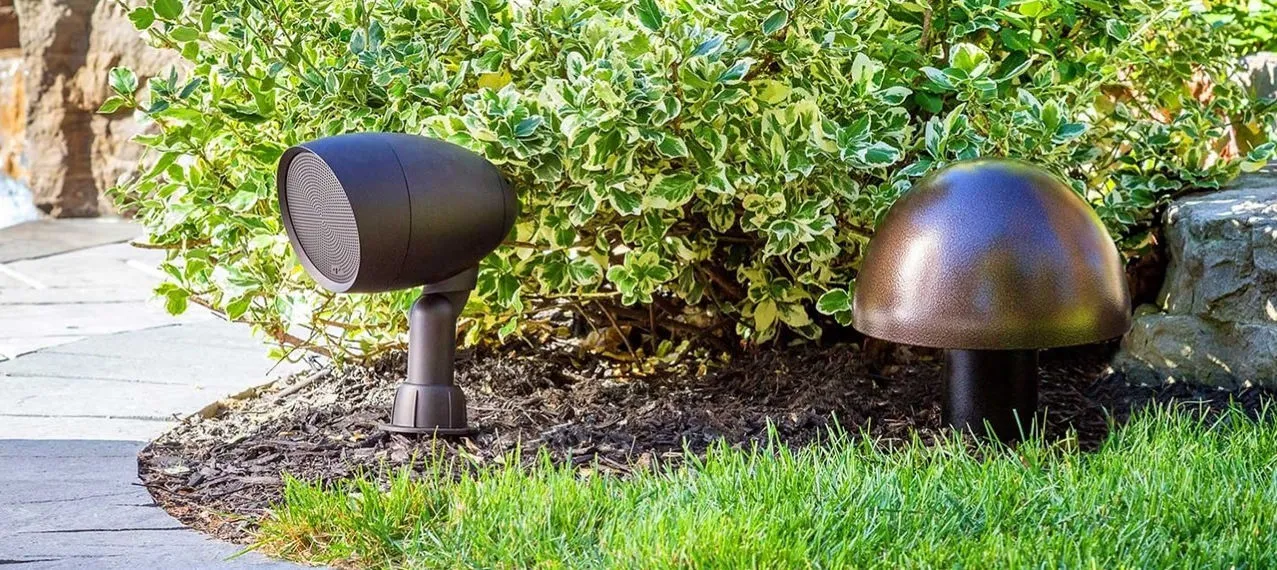
Placement should follow manufacturer recommendations, including mounting clearances and appropriate cable protection. Homeowners should also consider the appearance of speakers within the landscape. Architectural models and discreet landscape speakers may suit different outdoor designs. Choosing equipment based on exposure, listening requirements, and installation conditions helps avoid preventable problems.
Build a Realistic Budget Around the Entire Project
Speaker prices represent only one part of an outdoor audio investment. The number of listening zones, cable distances, amplification requirements, and mounting conditions can substantially influence the overall expense. When assessing outdoor speaker installation cost, homeowners should request an itemized proposal rather than comparing individual speaker prices alone.
A useful estimate should account for equipment, labor, wiring, and any required network or control components. Existing infrastructure may reduce some expenses, but difficult cable routes or extensive landscaping can increase installation complexity. Clear project boundaries help prevent unexpected changes during construction.
Make Controls Convenient for Everyone
An integrated audio system should be easy to operate during ordinary gatherings, not just during a demonstration. Depending on equipment compatibility, homeowners may be able to adjust separate listening zones through an application, keypad, or automation interface.
Practical controls should support common activities such as:
-
Playing background music throughout shared gathering areas.
-
Lowering patio volume without changing indoor settings.
-
Selecting different audio sources for separate zones.
-
Muting outdoor speakers when neighbors need quiet.
-
Turning off unused zones when entertaining ends.
These functions should be tested with household members who have different levels of technical experience.
Coordinate Audio With Existing Entertainment Equipment
Indoor and outdoor audio may need to work alongside televisions, streaming sources, amplifiers, and other entertainment components. Compatibility is important because not every device supports synchronized playback or the same control methods. During home entertainment system installation, homeowners can discuss future audio zones and cable pathways before equipment locations become difficult to change.
However, synchronized playback across multiple areas requires suitable hardware and configuration. It should never be assumed that unrelated speakers will operate together automatically.
Planning these connections early can simplify future expansion without requiring every component to be purchased immediately.
Respect Neighbors Without Sacrificing Listening Quality
Outdoor music can travel beyond property boundaries, especially during quiet evening hours. Increasing volume to compensate for poorly positioned speakers may make the problem worse. Several smaller speakers positioned toward the listening area can sometimes provide more consistent coverage than a single powerful unit.
Homeowners should also consider local noise restrictions, nearby windows, and the distance between neighboring properties. Limiting late-night volume and creating separate outdoor controls can make entertaining more considerate. A successful design lets guests enjoy music comfortably while reducing unnecessary sound beyond the intended area.
Conclusion
The most memorable gatherings depend on conversation and atmosphere, not the number of speakers installed. Effective audio design recognizes that a dining room, patio, and garden each have different listening requirements. Independent zones, suitable outdoor equipment, and convenient controls can support those differences without making the system complicated. For New Jersey homeowners, Epic Systems offers audio and entertainment integration services worth considering during project planning. Ultimately, thoughtful speaker placement often contributes more to a welcoming environment than simply increasing volume.